
Body composition scan · Open to the public · Roseville, MN
Find out what you’re actually made of.
Thirty seconds on the scanner. Self-service review on the InBody Touch. In and out. Your first scan is $45.
Validated against DEXA at 98% by Mayo Clinic researchers.
The same scan the top hospitals trust.
What is the InBody 580?
The InBody 580 is a multi-frequency bioelectrical impedance analysis (BIA) device used clinically to measure body composition. It assesses skeletal muscle mass, body fat mass and percentage, intracellular and extracellular water distribution, visceral adipose tissue, segmental lean mass (arms, legs, and trunk separately), and Phase Angle — a marker of cellular health and membrane integrity. In a 2020 Mayo Clinic validation study, InBody 580 measurements correlated with DEXA at 98%. The InBody 580 uses no radiation (it passes a safe imperceptible electrical current through the body), takes approximately 30 seconds, and can be repeated safely as often as needed for serial monitoring. Open to the public at Twin Cities Metabolism — $45 first scan, no referral required.
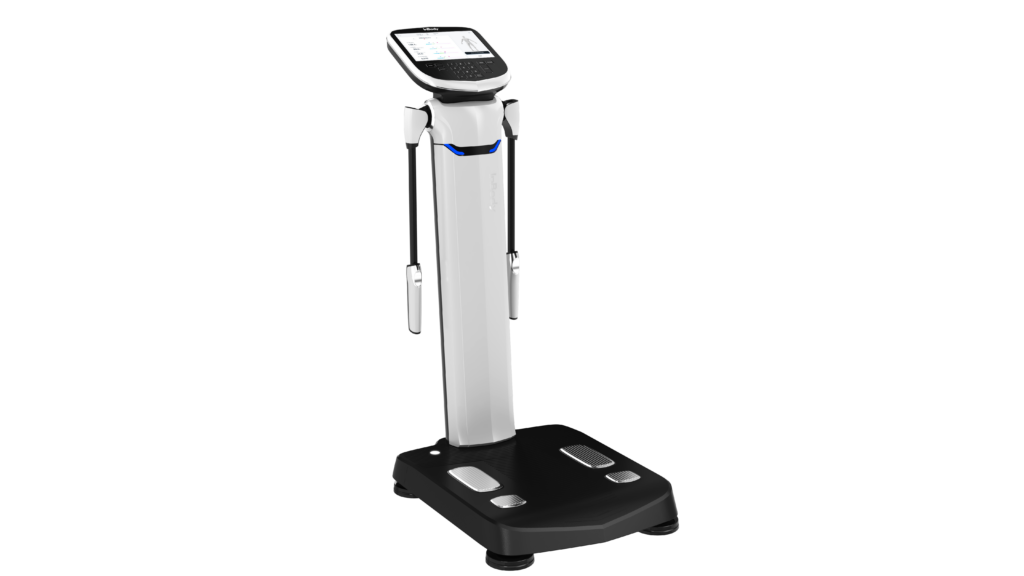
The InBody 580
The scale lies. The math behind it doesn’t.
Two people can weigh exactly the same and live in completely different bodies. A 180-pound man with 18% body fat and a 180-pound man with 32% body fat have different metabolic risk, different protein needs, different programs — and different lifespans.
Your bathroom scale doesn’t know the difference. The InBody 580 does.
In thirty seconds, you’ll see what your weight is actually made of — by body region:
- Muscle mass — total + symmetry left to right
- Body fat — including visceral fat, the dangerous kind
- Hydration — intracellular vs extracellular water
- Cellular health — via Segmental Phase Angle
- Metabolic baseline — BMR, SMI, InBody Score
No calipers. No dunk tank. No radiation.
Four things you won’t get at a gym body comp scan.
A private room
Your scan happens alone — no waiting room, no crowd, no rushed clinician hovering.
Your results on the InBody Touch
A large interactive touchscreen built into the room. The moment your scan ends, your full result appears — body composition, phase angle, segmental analysis — and you drag through it at your own pace. Your data syncs to the InBody app on your phone — open it anytime to revisit.
A medical clinic, not a gym
If your results reveal something — low muscle, high visceral fat, declining phase angle — you’re already at the right place to do something about it.
Not just body composition
Body composition is one piece. Your scan also captures cardiovascular health (blood pressure), functional strength (grip — one of the strongest single predictors of all-cause mortality), and cellular vitality (Segmental Phase Angle). One scan, multiple systems — all part of your $45 visit.
Honest pricing. No upsell.
$45 vs DEXA at $69–$300 — and you can come back as often as you want.
DEXA scans in the Twin Cities run $69–$300, and because DEXA uses X-ray radiation, you can’t safely repeat them often. The InBody 580 uses no radiation — just a safe imperceptible electrical current — so you can scan every 4 weeks for the entire length of your program without dose concerns. For tracking change over time, that matters more than any single scan’s precision.
Not recommended during pregnancy or for individuals with pacemakers or other implanted electrical devices.
| Option | Price | Per scan |
|---|---|---|
| First scan (new patients) | $45 | — |
| Single repeat scan | $45 | $45 |
| 4-scan pack | $149 | ~$37 |
The 4-scan pack is for patients tracking progress — typically one scan every 4 to 6 weeks.
Want the report and the meeting? Upgrade to the Comprehensive.
The InBody Scan ($45) is the easiest place to start — self-service, quick in-and-out. That’s perfect if you just want the numbers and the visual on the Touch screen.
If you want more — a written report you take home and a brief meeting with Dr Jared to go over it — the Comprehensive Metabolic Assessment ($195, 30 minutes) is the next step up. Either is a great start.
The Comprehensive includes:
- Full InBody body composition scan
- Breezing Med Resting Metabolic Rate test — your actual calorie burn at rest, plus whether you’re preferentially burning fat or carbohydrate as fuel (measured, not estimated)
- Brief clinician walkthrough of the integrated results
- A written report from our metabolic analysis system — yours to keep, share with your physician, or use as a baseline going forward
Open to the public — you don’t need to be a TCM patient. The InBody Scan and RMR Test are also available individually if you’d rather start there.
Here’s what your visit looks like.
Arrive
5 min early. No food, caffeine, or exercise within 4 hours. No alcohol the day before. Hydrate normally.
Prep
Remove shoes, socks, jewelry on hands/feet. Empty metal from pockets.
Scan
Hold the handles, stand still for 30 seconds. Scan complete.
Review on the InBody Touch
Self-service. Drag, zoom, explore. Data syncs to the InBody app on your phone.
Plan for 15 minutes. Take longer if you want to explore.
Watch: What is body composition? (2 min)
Quick answers.
Do I need to be a patient of the clinic to get a scan?
No — our InBody Scan is open to the public. You don’t need a referral, you don’t need to be a TCM patient, and you don’t need to schedule a consultation first. Just book the scan and come in.
How long until I get my results?
Immediately. Your data appears on the InBody Touch screen the moment the scan finishes — drag through it at your own pace. The data also syncs to the InBody app on your phone within the hour, so you can review it anytime.
How is this different from DEXA?
DEXA uses radiation (low-dose X-ray) and takes 10-20 minutes. InBody uses a safe imperceptible electrical current and takes 30 seconds. Mayo Clinic researchers validated InBody at 98% correlation with DEXA. The bigger practical difference: because InBody uses no radiation, you can scan as often as you want — every 4-6 weeks throughout a metabolic program — without dose concerns. DEXA’s radiation, while low, isn’t designed for frequent repeat tracking.
Is it safe? Anyone who shouldn’t use it?
It’s safe for the general public. We don’t scan during pregnancy or patients with pacemakers / other implanted electrical devices.
How accurate is it really?
Validated against DEXA (the research gold standard) at 98% correlation by Mayo Clinic researchers in a 2020 study. Used in over 5,000 peer-reviewed clinical studies.
How often should I scan?
For tracking a metabolic program, every 4-6 weeks. For general health monitoring, every 3-6 months. For one-time curiosity, once is enough.
Will someone walk me through the results?
Not as part of the $45 scan. You’ll review your own data on the InBody Touch — it’s designed to be intuitive, with each metric explained on-screen. If you want a clinical interpretation, the Comprehensive Metabolic Assessment ($195) includes a brief analysis with Dr Jared and a written report.
What if my results show a problem?
You’re already at a functional medicine clinic. Book a consult — we’ll dig in.
Book your scan. Stand on the data.
The first one is $45. The information lasts a lot longer.
Twin Cities Metabolism
1700 West Highway 36, Suite #400 · Roseville, MN 55113
Free parking. Easy access from 35W and 694.
No referral required · Open to the public
Important: The information on this page is for educational purposes and does not constitute medical advice, diagnosis, or treatment. Twin Cities Metabolism provides functional medicine consultation, not emergency care. If you are experiencing a medical emergency, call 911 or visit your nearest emergency room. Always consult with your qualified healthcare provider before making decisions about your health, medications, or treatment plan.